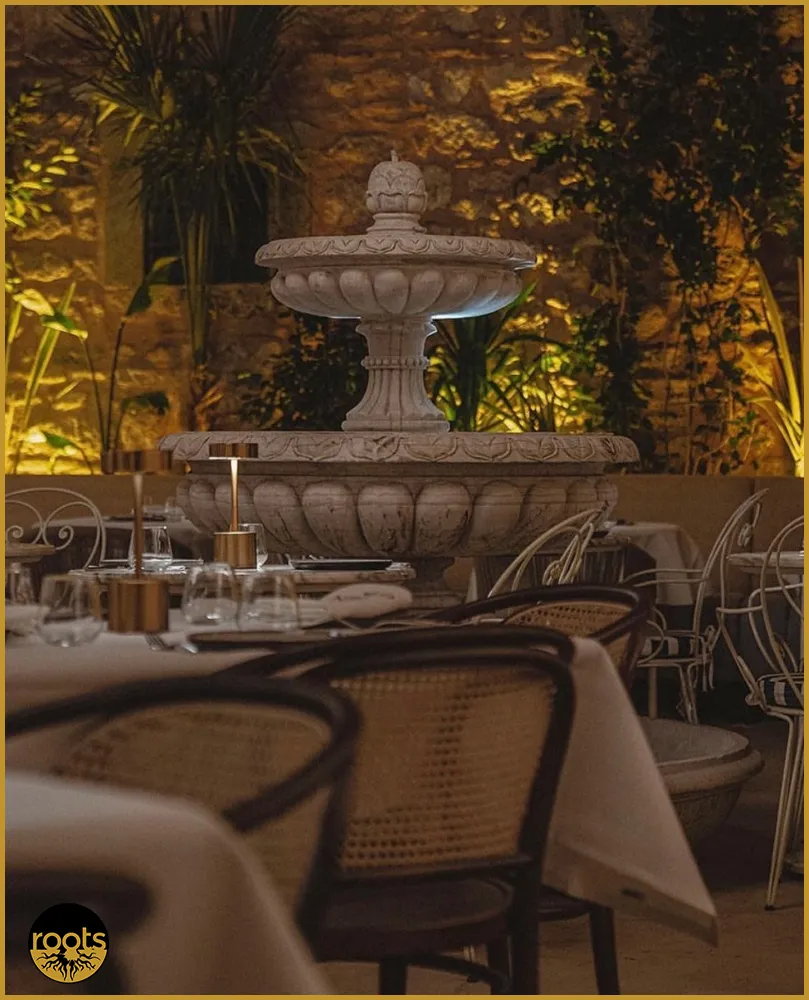
Where Aesthetics Meets Functionality in Architectural Restaurant and Garden Furniture
The success of a restaurant or cafe business is directly related to the atmosphere the venue offers as much as the flavors served. Architectural restaurant furniture is not merely a means of seating; it is the most important decorative element that shapes the identity of the venue, determines customer comfort and affects operational efficiency. In particular, the choice of restaurant garden furniture allows outdoor areas to be actively used for most of the year, increasing business capacity and customer satisfaction.
In a professional architectural approach, furniture should be selected to suit the circulation plan of the venue, be ergonomic and long-lasting. Transferring indoor comfort seamlessly to the outdoors preserves the corporate integrity of the business. In this guide, we will examine all the technical details that will enable you, as a business owner or architect, to make the right furniture investment.
Furniture Selection According to Business Needs
When choosing restaurant furniture, instead of asking "aesthetics or durability?", solutions that blend both should be sought. Furniture produced for commercial use, unlike household furniture, must have high traffic resistance standards. The joints, upholstery quality and frame structures of these products, which are constantly cleaned, moved and host guests of different weights, are designed for professional use.
- Ergonomics: It ensures that guests maintain the correct posture while dining and offers comfort during long sittings.
- Space Optimization: Stackable or modular designs that offer maximum seating capacity in narrow spaces increase business efficiency.
- Brand Image: Original designs help the business differentiate from its competitors and create "iconic" spaces that can be shared on social media.
Material and Durability Comparison in Restaurant Garden Furniture
Outdoor areas are exposed to challenging factors such as sunlight (UV), rain, humidity and sudden temperature changes. For this reason, material selection in garden furniture is the fundamental element that determines the return on investment (ROI) period. The table below compares the most commonly used material types according to different criteria:
| Material Type | Durability Level | Ideal Area of Use | Maintenance Requirement | Cost Axis |
|---|---|---|---|---|
| Aluminum (Electrostatic Powder Coated) | High (Rust-Proof) | Indoor and Outdoor | Very Low | Medium - High |
| Teak Wood | Very High (Naturally Oiled) | Premium Outdoor | Periodic Oiling | Upper Segment |
| Synthetic Rattan (Wintech etc.) | Medium - High | Garden and Terrace | Low | Medium |
| Polypropylene (Fiberglass Reinforced) | High (Flexible) | High Traffic / Outdoor | Minimal | Economical - Medium |
| Solid Oak/Hornbeam | High (For Indoor Use) | Interior Architecture | Medium | Medium - High |
Technical Details to Consider Before Purchasing
Checking the following items before deciding on a furniture group prevents extra costs that may arise in the future:
- 1. Fabric Technology: Cushions to be used outdoors must be water-repellent, stain-resistant and fade-resistant against UV rays (outdoor fabric).
- 2. Stackability: For garden furniture to be easily stored during winter months or during cleaning, a stackable structure is a major operational advantage.
- 3. Weight and Stability: Lightweight plastic furniture can cause problems in windy areas. Aluminum or heavy wooden frames provide wind resistance.
- 4. Foot Glides: High-quality polyethylene or rubber glides should be used on furniture feet to prevent floor scratches and provide sound insulation.
How Architectural Furniture Differs from Alternatives
The biggest difference between standard retail products and professional architectural furniture is engineering and scalability. Architectural restaurant furniture is designed by taking many technical data into consideration, from the floor slope of the commercial space to the lighting angle. In addition, unlike mass-produced products, custom color (RAL codes), texture and size options can be offered for corporate projects. This enables the business to create a "boutique" and "carefully crafted" perception.
Frequently Asked Questions
Metals such as iron and steel undergo corrosion (rusting) when they come into contact with water. Aluminum, on the other hand, is naturally rust-proof and a lightweight material. This feature significantly extends the lifespan of the furniture in outdoor use.
The Martindale test is a unit that measures the abrasion resistance of fabric. In intensive-use areas such as restaurants, it is recommended that fabrics have passed a durability test of at least 40,000 - 50,000 cycles.
For a comfortable dining experience, an average width of 60-70 cm per person should be allocated at a standard restaurant table. In architectural planning, these measurements directly affect circulation areas.
High-quality tropical woods such as teak can last 15-20 years or more with proper care (annual oiling). However, softwood types may lose their form within 2-3 seasons outdoors.
In summary; when investing in architectural restaurant furniture and restaurant garden furniture, focusing on the "service life / cost" ratio rather than the initial purchase cost is the most profitable strategy. Furniture produced with the right materials, suited to your business's concept, will both increase the comfort of your guests and ensure that your venue preserves its aesthetic value for many years.











































































