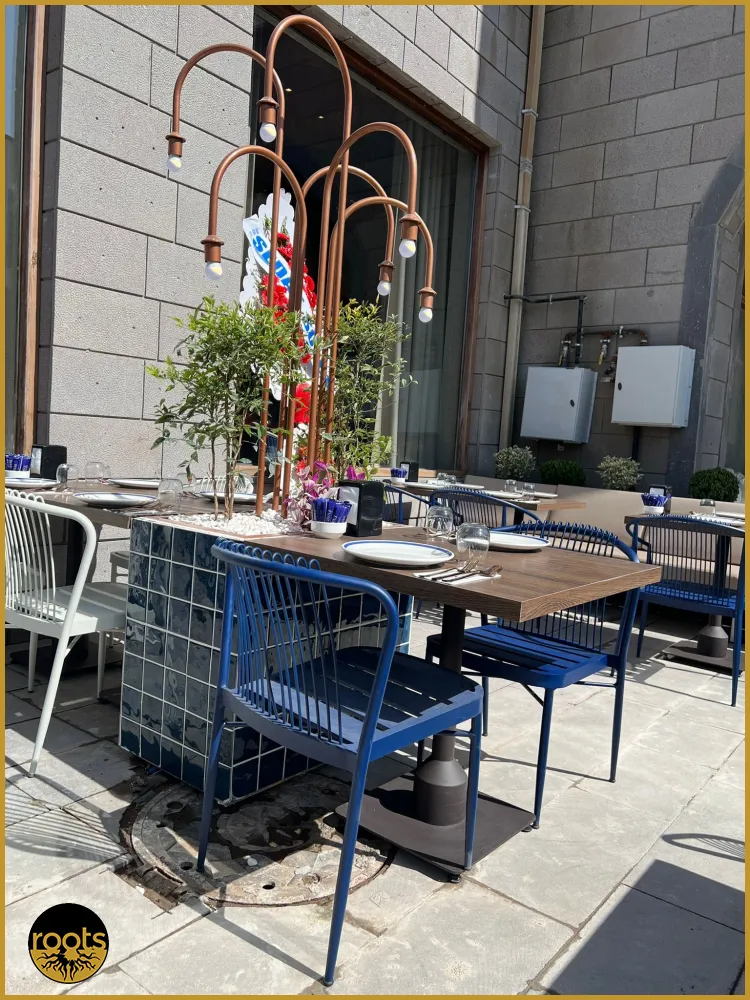
Architectural Restaurant Design: Bringing Together Aesthetics and Functionality
One of the keys to success in restaurant management is not limited to the flavors you offer, but also the unique experience you present to your guests. The foundation of this experience is formed by your restaurant's architectural design and interior arrangements. A well-designed restaurant both impresses aesthetically and increases operational efficiency, taking customer satisfaction to the highest level. A professional architectural restaurant design that reflects your restaurant's identity and brand value and appeals to your target audience can accelerate the return on your investment.
Why Is Restaurant Design Important?
The overall atmosphere of the restaurant directly affects the time customers spend in the space. Many elements such as lighting, color selection, furniture arrangement, materials used and acoustics determine how guests will feel. An effective restaurant interior design provides the following benefits:
- First Impression and Brand Identity: The impression formed the moment your guests step into the space gives an idea about the quality of your restaurant. Design strengthens your brand identity and creates a memorable image.
- Customer Experience and Comfort: Comfortable seating areas, sufficient movement space, correct lighting and a pleasant ambiance encourage guests to stay longer.
- Operational Efficiency: The smart placement of the kitchen, service area, bar and restrooms enables your staff to work faster and more effectively. Organizing customer flow is also important.
- Competitive Advantage: In a crowded food and beverage sector, an extraordinary and meticulous design sets you apart from your competitors.
- Optimization of Space Usage: Efficient use of empty spaces can increase your capacity and enable you to serve more guests.
Who Should Receive Architectural Restaurant Design Services?
Professional restaurant design services are not only for large chain restaurants or luxury venues. Regardless of business size and concept, restaurant design should be preferred in the following situations:
- Entrepreneurs planning to open a new restaurant.
- Operators who want to improve the atmosphere and efficiency of their existing restaurant.
- Those who want to strengthen their brand identity and enrich the customer experience.
- Those who think they cannot fully benefit from the physical features of the space.
- Those seeking original designs in different concepts (for example, fine dining, bistro, cafe, fast food, steakhouse, fish restaurant, etc.).
- Those whose lease agreement has just ended and who want to renew the decoration of the space.
How Does the Architectural Restaurant Design Process Work?
A successful restaurant design requires careful planning and implementation. The general process includes the following steps:
- Needs Analysis and Concept Determination: The general concept and functional requirements of the space are determined in line with your target audience, menu, brand values and budget.
- Space Survey and Measurement: Detailed examination of the existing space, taking measurements and identifying any architectural constraints.
- Concept Development and Draft Drawings: In line with the determined concept, initial design ideas, layout plans and visualizations (mood board, sketches) are created.
- Detailed Project Design: Architectural drawings (floor plans, sections, elevations), electrical, mechanical and plumbing projects are prepared.
- Material and Furniture Selection: Durable and aesthetic materials, furniture, lighting elements and accessories suitable for the design concept are selected.
- Implementation and Control: The on-site implementation of the design is carried out by professional teams and goes through the designer's approval.
Which Materials Are Used for a Restaurant?
The materials used in restaurant design are of great importance both aesthetically and functionally. Factors such as durability, ease of cleaning, hygiene and cost should be taken into consideration. Here are some commonly used material types:
| Material Type | Durability | Interior/Exterior Architectural Use | Cost (Average) |
|---|---|---|---|
| Natural Stone (Marble, Granite, etc.) | Very High | Both interior and exterior, floor, wall, countertop | High |
| Wood and Derivatives (Solid, Solid Veneer, MDF, etc.) | Medium-High (varies by application) | Mainly interior (floor, wall cladding, furniture) | Medium-High |
| Ceramic and Porcelain Tiles | High | Both interior and exterior (floor, wall) | Low-Medium |
| Concrete (Polyurethane Coated, etc.) | High | Both interior and exterior (floor, wall, countertop) | Low-Medium |
| Metal (Stainless Steel, Iron, etc.) | Very High | Both interior and exterior (structural elements, furniture, details) | Medium-High |
| Glass (Tempered, Laminated, etc.) | Medium-High (varies by type) | Both interior and exterior (facade, partition, tabletop) | Medium |
| Fabric and Upholstery | Medium (abrasion resistance is important) | Mainly interior (armchair, chair upholstery) | Low-High |
Points to Consider in Restaurant Design
The critical points that should not be overlooked during the design phase for a restaurant to be successful are as follows:
- Target Audience Analysis: Who you appeal to should determine the overall direction of the design. Young people, families, or corporate clients?
- Flow of the Space: Comfortable and unobstructed movement of customers and staff improves the overall experience. Entrance, seating areas, service routes and access to restrooms are important.
- Lighting Design: Proper lighting determines the ambiance. A balance of general lighting, task lighting (tabletops, bar counter) and accent lighting should be established.
- Acoustic Comfort: Noise not being disturbing positively affects the dining experience. Sound-absorbing materials and proper space arrangement can be used.
- Ergonomics and Comfort: The comfort of seating groups, table heights and seating distances are fundamental for guest comfort.
- Hygiene and Ease of Maintenance: The materials used being easy to clean and hygienic is of vital importance, especially in kitchen and restroom areas.
- Flexibility and Scalability: The space being able to adapt to different events or future changes provides an advantage in the long term.
- Technological Integration: Integrating technological infrastructure such as lighting, sound system and POS systems into the design.
Frequently Asked Questions (FAQ)
The duration of restaurant design varies greatly depending on the scope, size and complexity of the project. While a simple renovation takes a few weeks, a comprehensive restaurant design and implementation from scratch may require a period of 6 months to 1 year. While the project design phase usually takes a few months, the construction and implementation process varies depending on the space.
Restaurant design cost depends on many factors such as the size of the space, the quality of the selected materials, the details of the concept, furniture and lighting preferences, and the fees of the architect/interior architect. To give a rough estimate, the design and implementation cost per square meter can fall within a wide range. Therefore, it is important to first conduct a detailed needs analysis and determine a budget.
There are several different ways to modernize an existing restaurant: The overall color palette and lighting of the space can be changed, the furniture can be renewed or the existing ones can be restored and used, new coverings or decorative elements can be used on the walls, the flooring can be changed, or the layout of the service areas can be redesigned to increase operational efficiency. Even a partial renovation can give the space a fresh look.
In small restaurants, light colors can be preferred to make the space look more spacious and functional, the depth of the space can be increased with the use of mirrors, space can be saved by using wall-mounted furniture or folding tables, multi-functional furniture can be chosen, order can be provided with vertical storage solutions, and ambiance can be created with smart lighting systems. In addition, care should be taken to avoid clutter in table arrangements.
Among the popular concepts for restaurant design, "industrial" (where raw, unprocessed materials are at the forefront), "bohemian" (relaxed, artistic and eclectic), "minimalist" (serene with simple, functional and few items), "vintage/retro" (carrying traces of the past), "modern" (clean lines, technological touches) and "natural/eco" (organic materials, green plants) stand out. However, the most important element is that the chosen concept is compatible with the brand's identity and target audience.
Maximize the potential of your business with a professional architectural restaurant design. Making the right design decisions is critically important for your space to meet your expectations in terms of both aesthetics and functionality, and for your guests to collect unforgettable memories.











































































