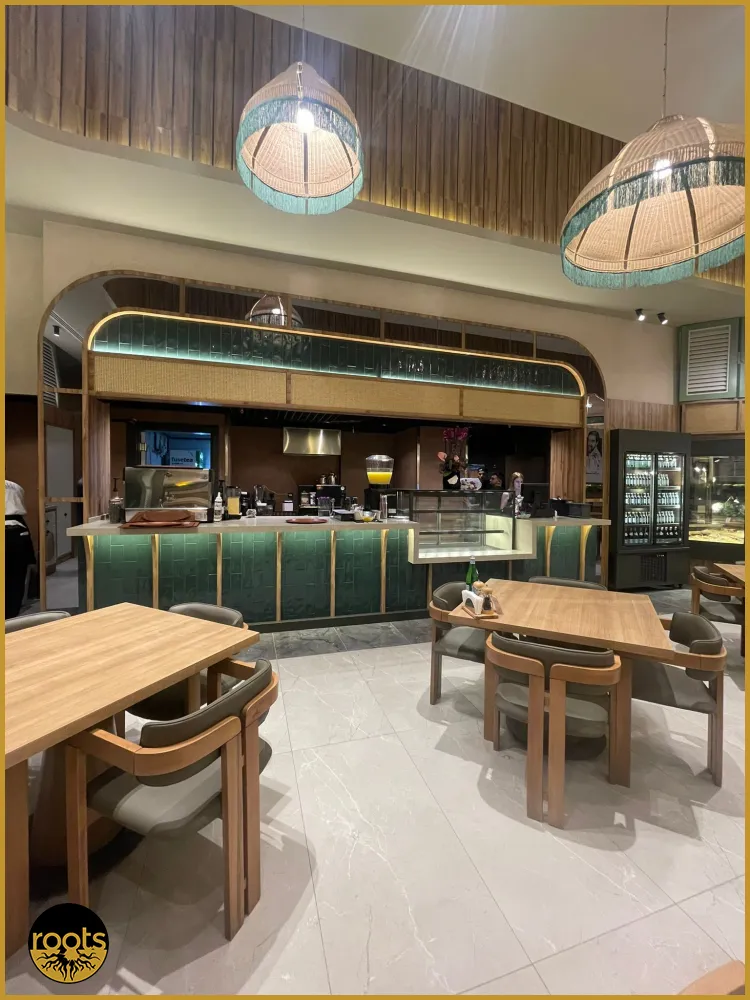
INTERIOR ARCHITECTURE RESTAURANT DESIGNS - RESTAURANT INTERIOR DESIGNS: Transform the Customer Experience
Create an unforgettable customer experience by maximizing your restaurant's atmosphere and functionality.
Interior architecture designs play a critical role in your restaurant's success. You don't just offer delicious meals to your customers; you also provide them with a pleasant and comfortable environment. A well-designed restaurant interior reflects your brand identity, increases customer loyalty and generally elevates your business performance. Your restaurant's ambiance affects every moment from the customer's first impression to their last departure.
Why Is Restaurant Interior Design Important?
- Customer Experience: A comfortable, aesthetic and functional space encourages customers to stay longer and spend more.
- Brand Identity: Design visually communicates your restaurant's concept, values and target audience.
- Functionality: A design that optimizes customer and staff flow increases operational efficiency.
- Competitive Advantage: Unique and attractive designs set you apart from your competitors and help you attract more customers.
- Social Media Impact: Aesthetically pleasing spaces are shared by customers on social media and provide free marketing.
Who Is It Suitable For?
Restaurant interior designs are suitable for a wide range of businesses, including:
- Restaurants that are about to open
- Operators who want to renew the atmosphere of their existing restaurants
- Those planning to rebrand with a different concept
- Cafes, bistros, bars, pubs, fine dining restaurants
- Quick service restaurants and food court venues
- Themed restaurants
Which Needs Does It Meet?
A comprehensive restaurant interior design project meets the following core needs:
- Aesthetics and Atmosphere: Creating an inviting and memorable atmosphere suited to the restaurant's concept.
- Space Organization: Functional placement of customer seating areas, service areas, kitchen and restrooms.
- Comfort: Creating an environment where customers and staff can move comfortably, with a balance of sound and light.
- Durability and Maintenance: Selection of materials suitable for intensive use, easy to clean and long-lasting.
- Budget Management: Smart material and design choices to achieve the best results within the determined budget.
- Legal Requirements: Ensuring compliance with legal standards such as fire safety and disabled access.
In Which Situations Should It Be Preferred?
Restaurant interior design should definitely be considered in the following situations:
- When a decline in customer satisfaction is observed.
- When it is thought that the space has physically aged and become outdated.
- When wanting to reach a different target audience or adopt a new concept.
- When aiming to stand out in competition and create a memorable brand image.
- When problems are experienced with the functionality of the space (for example, narrow corridors, insufficient seating area).
- When the space layout needs to be improved in order to increase operational efficiency.
In What Ways Does It Differ from Alternatives?
Professional restaurant interior architecture designs differ from standard decoration solutions or amateur approaches in the following ways:
- Comprehensive Approach: Not only aesthetic concerns but all elements such as functionality, customer flow, staff efficiency, brand identity and budget are evaluated together.
- Expertise and Experience: Architects specialized in their field have in-depth knowledge of materials, ergonomics and current trends.
- Originality: Offers personalized solutions that reflect each restaurant's unique identity and needs.
- Technical Details: Technical details such as lighting planning, acoustic arrangement, ventilation and plumbing are handled professionally.
- Long-Term Investment: Considering durability and ease of maintenance as well as aesthetics, it provides cost advantages in the long term.
Things to Consider in Material Selection
The materials to be used in restaurant interiors are of great importance both aesthetically and functionally. Material selection determines the overall atmosphere of the space while also directly affecting its durability and maintenance.
| Material Type | Durability | Interior / Exterior Architectural Use | Cost (General Assessment) | Example Areas of Use |
|---|---|---|---|---|
| Wood | Medium - High (depending on type and treatment) | Both (specially treated for outdoor use) | Medium - High | Tabletops, chairs, wall panels, flooring (parquet) |
| Natural Stone (Marble, Granite, etc.) | High | Both | High | Countertops, floors, wall claddings, bar front |
| Ceramic / Porcelain Tile | High | Both | Low - Medium | Floors, wall claddings (kitchen, restroom), flooring (restaurant area) |
| Metal (Stainless Steel, Iron, etc.) | Very High | Both | Medium - High | Table legs, chair frames, lighting fixtures, decorative elements |
| Concrete / Microcement | High | Both | Low - Medium | Floors, wall claddings, countertops (for industrial/modern concepts) |
| Fabric / Leather (Upholstery) | Medium - High (depending on quality) | Interior only | Medium - High | Chair and sofa upholstery, wall panels |
What Should Be Considered Before Purchasing?
Here are the important points to consider before receiving a restaurant interior design service or undertaking a large-scale renovation:
- Determining a Budget: Create a realistic budget and take all possible expenses (materials, labor, furniture, lighting, etc.) into account.
- Defining the Target Audience: Clarify whom you want to serve. The design must meet the expectations of your target audience.
- Concept and Theme: Determine the main concept of your restaurant and the message it wants to convey. The design must be in line with this theme.
- Physical Conditions of the Space: Consider factors such as the dimensions of the existing space, daylight intake, columns, and utility points.
- Functionality Priority: As much as aesthetics, pay attention to functional elements such as customer flow, ease of service, kitchen connections, and staff movement areas.
- Legal Regulations: Learn about legal requirements such as zoning regulations, fire safety, hygiene standards, and accessibility in the location of the space.
- Getting Expert Advice: Working with an interior architect or designer enables you to manage the process professionally and achieve the best results.
- Reference Check: Review the previous work of the designer or company you are considering working with and learn about customer feedback.
- Material Selection: Choose materials carefully in terms of durability, ease of cleaning, and suitability for the overall atmosphere of the space.
- Lighting Planning: Proper lighting greatly affects the atmosphere of the space. Use general lighting, task lighting, and accent lighting in a balanced way.
Frequently Asked Questions (FAQ)
A professional interior architectural design should capture the spirit of the established concept and reinforce it visually. While staying faithful to your concept, the designer offers solutions that make the space more functional and aesthetic. The concept forms the foundation of the design, while the design process details it and brings it to life.
Yes, of course it is possible. Instead of a full renovation, partial renewals can also be done. For example, modernizing only the seating area, the bar or the facade. In such cases, care is taken to produce solutions that are compatible with the overall design of the existing space.
Lighting is one of the elements that most affect the atmosphere of a restaurant. Correct lighting increases the warmth, invitingness and elegance of the space. When planning, general lighting (lighting the space overall), task lighting (lighting specific areas such as tabletops) and accent lighting (highlighting decorative objects) should be used in a balanced way. Light colors suited to your concept (warm white, cool white, etc.) and the choice of fixtures are also of great importance.
Acoustic design aims to control sound insulation and sound reverberation in restaurants. A noisy environment can negatively affect the customer experience. By using the right acoustic materials (sound-absorbing panels, fabric-covered walls, special ceiling systems), an environment is created where both customers can converse comfortably and staff can work comfortably. Especially in crowded venues, acoustics directly affects the level of comfort.
This content is for informational purposes.











































































