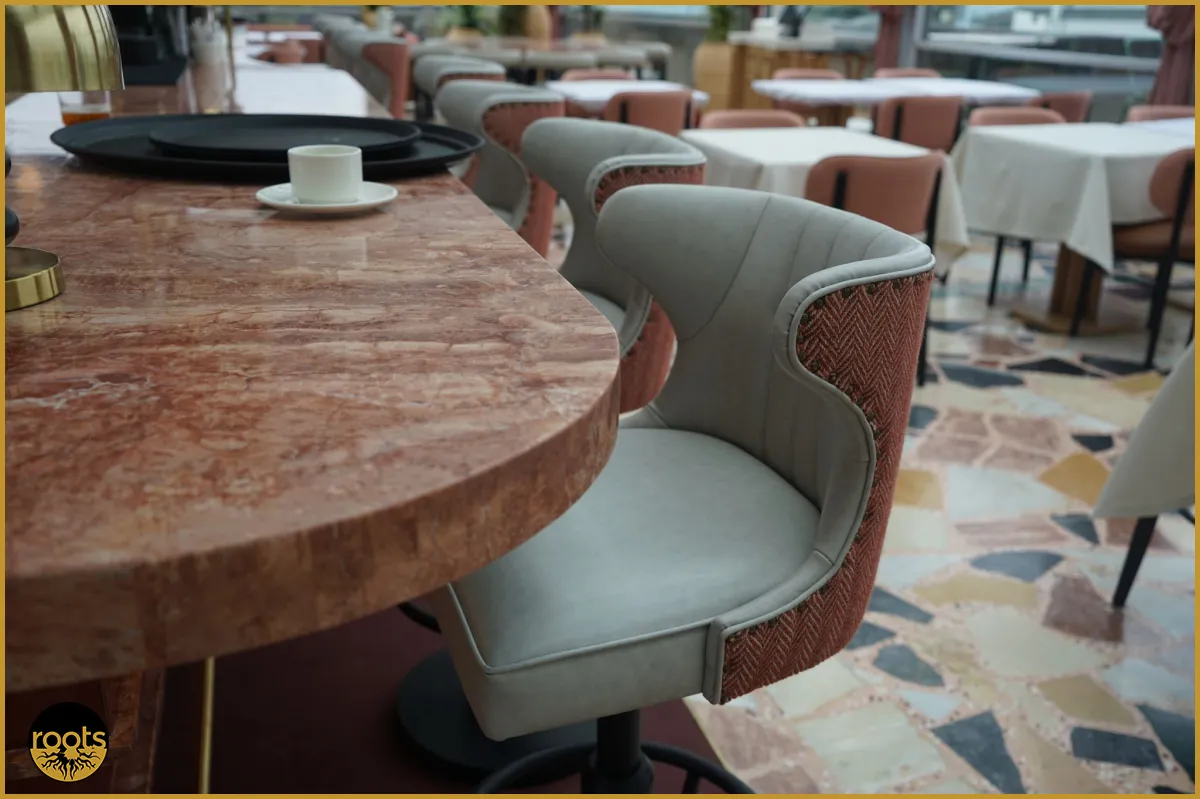
LUXURY RESTAURANT DECORATIONS - RESTAURANT INTERIOR DESIGNS
Along with delicious food, the atmosphere and comfort a restaurant offers play a major role in its success. Luxury restaurant decorations and interior designs are the key to offering your guests an unforgettable experience. These special spaces are more than just places to eat; they are venues where aesthetics and elegance come together, and taste turns into a visual feast. The right design should reflect your brand's identity, meet the expectations of your target audience and increase the overall performance of your venue.
What Is the Purpose of Luxury Restaurant Design?
The main purpose of luxury restaurant designs is to offer guests a superior service and comfort experience. This is not limited to an aesthetic appearance; it also:
- Strengthens Brand Image: The design of the venue directly reflects your brand's prestige and quality.
- Increases Customer Satisfaction: A comfortable, stylish and inviting environment encourages guests to stay longer and want to visit again.
- Creates a Unique Atmosphere: Every luxury restaurant should have its own story and character. Design plays an important role in telling this story.
- Ensures Functionality: As much as aesthetics, a smooth service flow, staff being able to work comfortably and guests being able to move around comfortably are also part of the design.
Who Is It Suitable For?
Luxury restaurant decorations and interior designs are ideal for businesses with the following profiles:
- Fine Dining Restaurants: Venues that offer a high-level culinary experience and host special guests.
- Boutique Hotel Restaurants: Hotels that want to offer a stylish and exclusive atmosphere in harmony with the hotel's overall concept.
- Special Event Venues: Places that host special organizations such as henna nights, weddings and engagements and want to offer guests an unforgettable environment.
- Chain Restaurants (Premium Concepts): Chain brands that target a specific concept and quality standard and want to reflect the brand's prestige.
- Bar and Lounge Areas: Venues that serve as a cafe during the day and a stylish meeting point in the evening, and that value aesthetics.
What Needs Does It Meet?
Luxury designs not only provide visual satisfaction, they also:
- Define the Venue's Identity: They make it possible to understand at first glance what kind of experience the venue offers.
- Increase Customer Loyalty: They create loyalty by making guests feel special in the venue.
- Support High Pricing Strategies: Quality design increases the value of the products and services offered and justifies higher pricing.
- Strengthen Social Media Engagement: Aesthetically striking venues encourage guests to share visuals, providing free marketing.
- Raise Employee Motivation: A pleasant and orderly work environment positively affects staff motivation and productivity.
When Should It Be Preferred?
Luxury restaurant decorations should especially be preferred in the following situations:
- Opening a New Restaurant: To ensure a strong first impression of the venue and reach the right target audience.
- Reconceptualizing an Existing Venue: To revitalize venues that have become outdated or fail to meet expectations.
- Need to Elevate Brand Image: When aiming to reach a more prestigious position or position in the high segment.
- Gaining a Competitive Advantage: To stand out from other restaurants in the area.
- For Special Events or Tours: To present a visual at international standards in tourist areas or venues hosting special events.
Types of Materials Used in Luxury Restaurant Design
The choice of materials used in luxury restaurant designs directly affects the venue's overall atmosphere, durability and cost. Here are some commonly used materials and their features:
| Material Type | Durability | Interior/Exterior Architectural Use | Cost (Relative) | Features |
|---|---|---|---|---|
| Natural Stone (Marble, Granite) | Very High | Both Interior and Exterior (with appropriate treatments) | High | Aesthetic, prestigious, durable, natural patterns. May require maintenance. |
| Solid Wood | High | Primarily Interior | Medium-High | Offers a warm, natural and classic look. May require careful use against moisture and scratches. |
| Metal (Brass, Copper, Stainless Steel) | High | Both Interior and Exterior | Medium-High | Can create modern, industrial or classic looks. Can be enriched with different surface treatments. |
| High-Quality Leather | Medium-High | Interior | High | Gives a luxurious and comfortable feel. Requires maintenance. |
| Velvet and Special Fabrics | Medium | Interior | Medium-High | Adds a rich and glamorous texture. Used in armchairs, curtains and upholstery. May be prone to staining. |
| Decorative Panels (Wood Veneer, Metal, etc.) | High | Interior | Medium | Adds depth and character to walls or ceilings. |
| Glass (Tempered, Laminated, Decorative) | High | Both Interior and Exterior | Medium | Makes the space feel airy, reflects light. Specially patterned glass offers high aesthetic added value. |
| Natural Textured Paints and Coatings | Medium-High | Interior | Low-Medium | Provides an authentic look by imitating natural textures such as concrete, lime and cedar. |
Design Process and Considerations
A comprehensive luxury restaurant design process consists of several key steps and requires careful planning at every stage:
A main concept is determined in line with the target audience of the space, the type of cuisine offered and the management approach. This concept will form the overall identity of the space. For example, richer and more traditional elements may be preferred for classic French cuisine, while brighter and more spacious details may be preferred for modern Mediterranean cuisine.
All functional areas such as table layouts, service areas, kitchen connections, restrooms and waiting areas are optimized by considering guest flow and staff efficiency. Space utilization should be kept at the highest level.
Durable, aesthetic and high-quality materials are selected in line with the determined concept. The color palette is carefully determined to create the desired atmosphere of the space. Texture and material harmony enhances the richness of the space.
Lighting is one of the elements that most affect the atmosphere of a space. The use of natural light, ambient lighting and task lighting (such as over tables) should be planned in a balanced way. Dimmable systems provide flexibility for different time periods.
Furniture such as tables, chairs, armchairs and bar stools is important in terms of both aesthetics and ergonomics. Accessories (paintings, plants, decorative objects) complete the character of the space.
What is desired in a luxury space is an environment where conversation can be held comfortably, but noise is not disturbing. This balance is achieved by using sound insulation and acoustic panels.
What Are Its Differences from Alternatives?
Luxury restaurant designs are distinguished from standard or economy-class designs in the following ways:
- Material Quality: More expensive, durable and aesthetically superior materials are used.
- Detail Focus: These are designs where every detail is carefully considered and fine craftsmanship is at the forefront.
- Uniqueness: They are specially designed for each space, offering custom solutions instead of ready-made solutions.
- Creating Atmosphere: They do not only create a space, but also create an atmosphere that promises a certain feeling and experience.
- Longevity: Thanks to the quality materials used and solid craftsmanship, the life of the space is extended.
Frequently Asked Questions
The design and implementation period varies depending on the size of the space, the complexity of the project and the current situation. Generally, a period of 3 to 12 months can be foreseen.
Yes, redecorating an existing restaurant and changing its concept is absolutely possible. During this process, a detailed analysis of the existing structure is carried out and it can be given a completely new identity.
The budget is primarily shaped by factors such as the concept, the size of the space, material choices, furniture and lighting. After a detailed survey and needs analysis, a proposal tailored to you will be created.
Yes, today designing with sustainable and eco-friendly materials is becoming increasingly important in terms of brand image and corporate responsibility. The options on this matter can also be evaluated during the design process.
Luxury restaurant decorations and interior designs are a critical investment that gives your venue an identity, takes the customer experience to the top and increases the value of your business. The right design approach is one of the most important factors that guarantee success in the long term.











































































