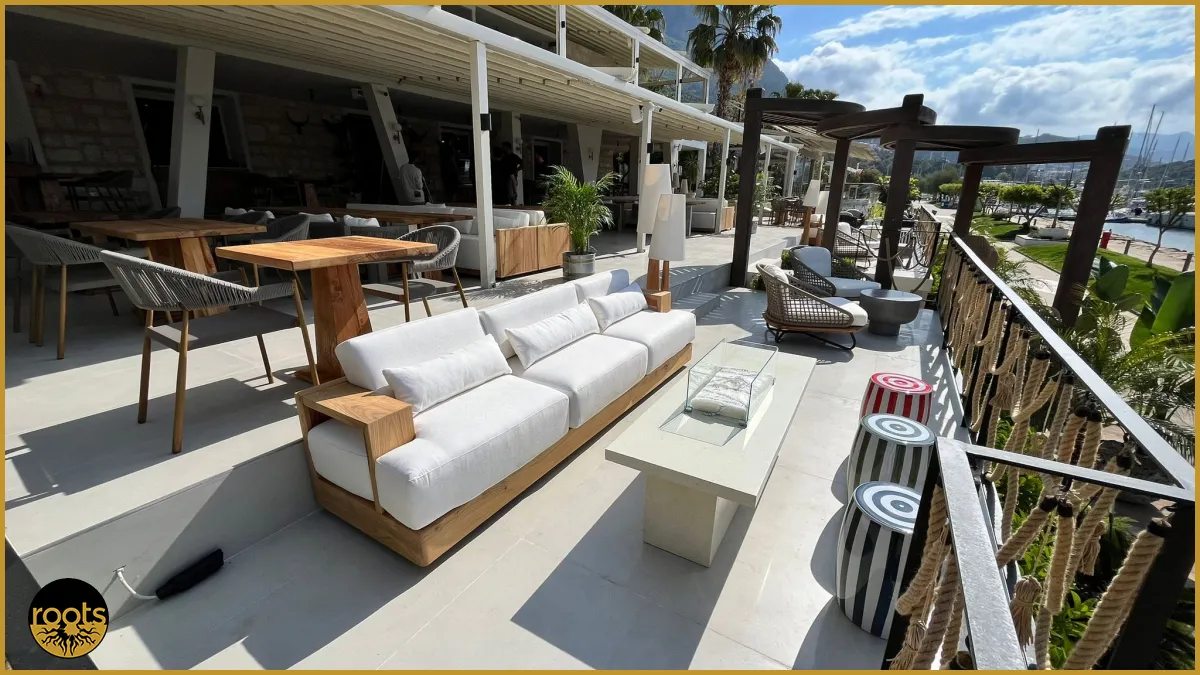
Professional Approaches in Choosing Restaurant Garden Table Chair
The outdoor space of a business is the first physical contact the customer establishes with the restaurant. The choice of restaurant garden table chair is not only an aesthetic preference, but also an investment that directly affects business efficiency and customer loyalty. Outdoor furniture differs sharply from home-type furniture because it is exposed to challenging factors such as sunlight, rain, humidity and intensive use.
Identifying Business Needs and Purposes of Use
The main purpose of the furniture used in restaurant gardens is to reflect the spirit of the venue while offering a comfortable dining experience. These products are optimized for points with high circulation in commercial areas such as cafes, restaurants, hotels and bistros. When the right choice is made, it provides space saving and facilitates operational processes. Especially stackable models offer a great advantage to business staff in cleaning and storage processes.
Comparative Analysis by Material Types
There are many different material options on the market. The location of your business (seaside, city center, etc.) and your budget play a determining role in this choice. The following table summarizes the main features of the most preferred materials:
| Material Type | Durability | Venue Compatibility | Cost Index |
|---|---|---|---|
| Aluminum | Very High (Rustproof) | Modern / Minimalist | Medium - High |
| Teak Wood | High (Naturally Oiled) | Classic / Luxurious | High |
| Synthetic Rattan | Medium - High (UV Protected) | Warm / Friendly | Medium |
| Polypropylene (Plastic) | Medium (Economical) | Colorful / Dynamic | Low |
Critical Points to Consider Before Purchasing
Considering the following points before making an investment provides cost savings in the long term:
- UV Resistance: Plastic or rattan materials must be UV-added so that their color does not fade and they do not become brittle under the sun.
- Weight Balance: Furniture should be heavy enough not to tip over in the wind, but light enough to be carried during cleaning.
- Ergonomics: Back support and seat width should be at ideal dimensions so that customers can sit for a long time.
- Floor Compatibility: It is important that the leg parts have glides that will not scratch the floor and allow balance adjustment.
- Cleanability: Fabrics/surfaces with low porosity, stain resistance and quick drying should be preferred.
Why Should Commercial-Type Furniture Be Preferred?
While home-type garden furniture is designed for a few hours of use per day, the restaurant garden table chair is used for hours by dozens of different people every day. The joint points, welding quality and surface coatings of commercial-type furniture are reinforced for these heavy-duty conditions. Although it may seem costly at first compared to its alternatives, it is more advantageous in total cost of ownership because the replacement period is much longer.
Frequently Asked Questions
1. How should winter maintenance be done for outdoor furniture?
Furniture not used during the winter months should definitely be covered with protective covers or stacked and taken to a closed area. Especially for products with metal components, the joints should be checked once a year.
2. Which table top type is more long-lasting?
Compact laminate (Werzalit-like) and marble-look ceramic tabletops are the most durable options against scratches and high heat (cigarette burns, hot plates).
3. Does color choice affect the sense of space?
Yes, light colors make narrow spaces look wider and more spacious, while dark colors create a more elite and heavier atmosphere. However, it should not be forgotten that very dark colors will heat up more under the sun.
Final Assessment for the Right Investment
In conclusion, an ideal restaurant garden table chair set should have features that are compatible with your business's concept, resistant to climate conditions, and prioritize customer comfort. When taking the measurements of your venue, planning the layout by taking into account the passage areas for customers and service staff (minimum 60-80 cm) will speed up the operational flow. Knowing the maintenance requirements of the material you choose in advance helps your furniture preserve its first-day form for years.











































































