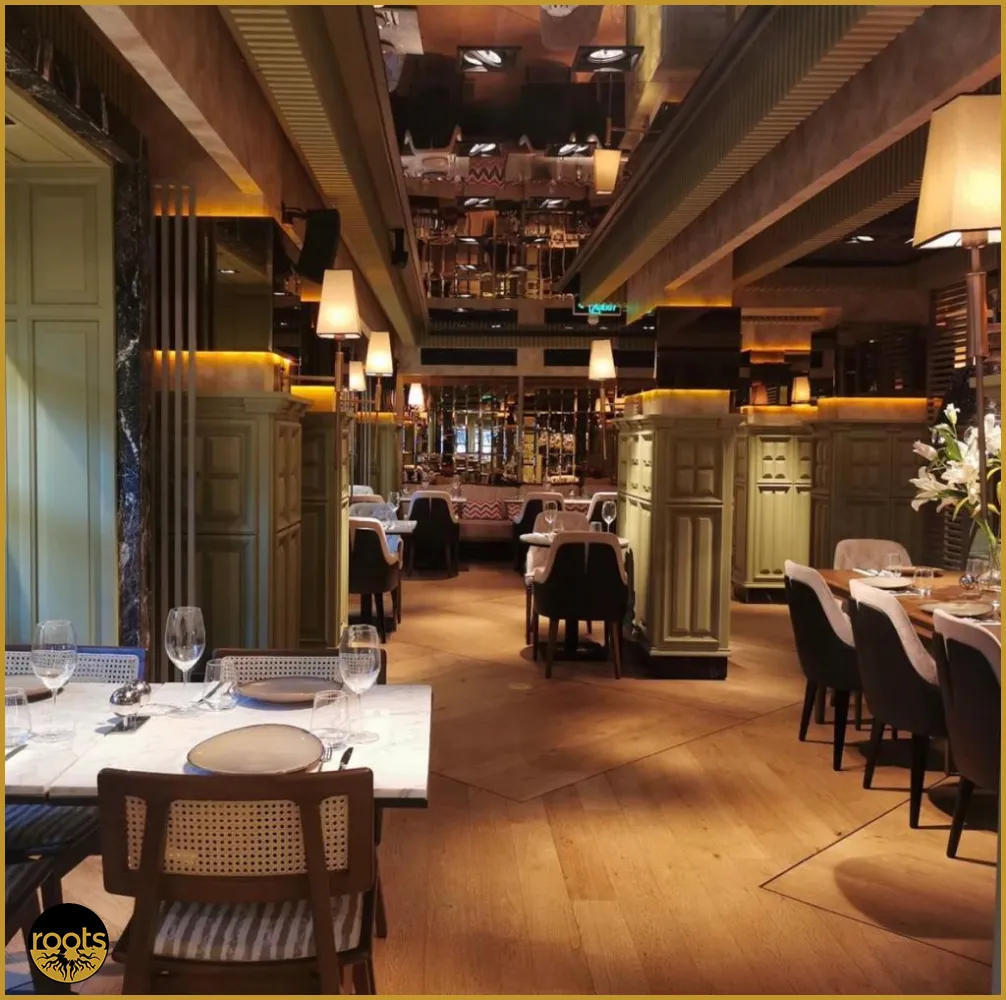
Architectural Restaurant Design: Where Aesthetics and Functionality Meet
The success of a restaurant business is directly related to the atmosphere guests are in as much as the quality of the menu offered. Architectural restaurant design is not just a visual arrangement; it is a strategic process that optimizes the customer experience, increases operational efficiency and transforms brand identity into a physical space. Restaurant interior designs create the spirit of a venue while also determining the workflow of the staff and the speed between kitchen and service.
What Does Professional Restaurant Design Cover?
A professional interior project aims to use every square meter efficiently by pushing the physical boundaries of the space. The main elements considered in this process are as follows:
- Space Organization and Circulation: Planning the passage of customers from the entrance to the table, the route of the service staff and the kitchen exit points so that they do not overlap.
- Lighting Scenarios: Making maximum use of daylight, and in the evening hours, focused and ambient lighting suited to the mood of the venue.
- Acoustic Planning: Sound insulation and surface solutions that prevent the hum even during crowded moments and allow customers to hear each other comfortably.
- Ergonomics and Comfort: The suitability of the selected furniture for seating durations and a layout in which the customer feels safe.
Design Strategies According to Business Needs
Every restaurant has a different audience and service model. Therefore, the design must respond to these needs. For example, while more dynamic and durable materials that support fast circulation are preferred in a "Fast Casual" restaurant; privacy, comfort and the perception of luxury come to the fore in a "Fine Dining" restaurant.
Restaurant design becomes a critical need in the following situations:
- Reflecting brand value onto the physical space while creating a new brand.
- Eliminating the operational errors of an old business and modernizing the venue.
- Optimizing revenue potential by increasing the capacity of the venue.
- Solving technical infrastructure (ventilation, plumbing, electrical) problems by combining them with architectural aesthetics.
Material Selection and Performance Comparison
The materials to be used in restaurants are expected to be both resistant to heavy traffic and to support the aesthetics of the venue. The following table compares the features of some material groups commonly preferred in restaurant interior and exterior spaces:
| Material Type | Durability | Area of Use | Cost Axis |
|---|---|---|---|
| Natural Stone (Marble/Granite) | High (Scratch resistant) | Floor, Countertop, Decorative Wall | High |
| Solid Wood | Medium (Requires maintenance) | Furniture, Ceiling Details | Medium - High |
| Industrial Metal / Steel | Very High | Open Kitchen, Bar Top, Exterior | Medium |
| Porcelain Ceramic | High (Easy to clean) | Kitchen, Floor, Wet Areas | Low - Medium |
| Epoxy Coatings | High (Seamless surface) | Kitchen and Industrial Areas | Medium |
Points to Consider Before Purchasing and Implementation
Before receiving an architectural design service or starting the implementation process, investors considering the following points will increase the accuracy of the decision:
- Licensing and Technical Regulations: It is not enough for the design to be merely beautiful; it must fully comply with municipal regulations, fire consultancy and kitchen hygiene rules (such as HACCP).
- Budget Planning: In order not to exceed the budget set during the design phase, a price-performance balance should be observed in material selections.
- Operational Flow: Even the time it takes for waiters to leave the kitchen and reach the table is part of the design. A faulty layout can increase staff costs in the long run.
- Ventilation Infrastructure: Kitchen odors leaking into the customer area can overshadow even the best design. Importance should be given to mechanical solutions that are invisible yet vital.
Frequently Asked Questions
How is the cost of restaurant design determined?
The cost varies depending on the square meterage of the space, the quality of the selected materials, the condition of the mechanical infrastructure and the level of detail of the design. It is generally priced on a project basis or as turnkey including implementation.
How long does the design process take?
The concept design phase generally takes 2-4 weeks, while the preparation of detailed implementation projects can take between 4-8 weeks depending on the size of the space.
Is it more sensible to restore an old space or to build from scratch?
If the structural system and location of the space are suitable, restoration generally adds character and is environmentally friendly. However, if the infrastructure has completely collapsed, designing from scratch may be more advantageous for operational efficiency.
Differences Between Alternative Approaches
In the market, standard decoration services and professional architectural design services are frequently confused. While standard decoration focuses only on furniture placement and paint color, comprehensive architectural design addresses every detail with engineering precision, from the electrical loads of the space to its air conditioning capacity, from acoustic comfort to the color theories that influence customer psychology. This difference manifests itself in the long-term durability of the business and in customer loyalty.











































































