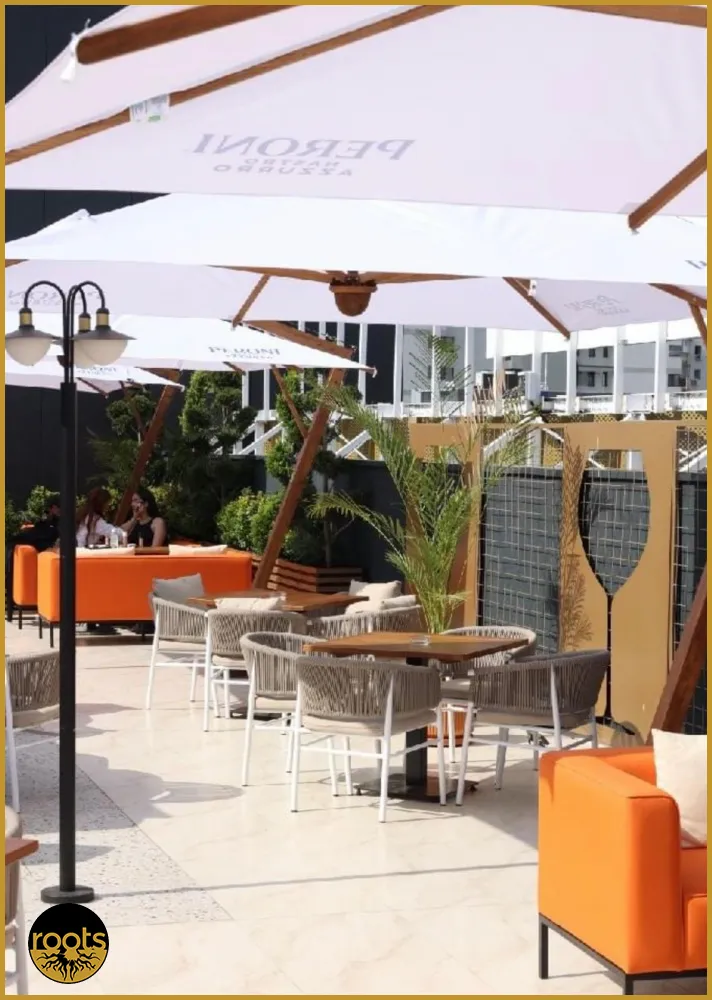
Choosing the Right Table and Chair for Your Restaurant: A Comprehensive Guide
Table and chair choices, which directly affect your restaurant's atmosphere, comfort and operational efficiency, are an important element that reflects your brand's identity. In this comprehensive guide, you will find all the details you need to pay attention to when choosing restaurant furniture.
What Is a Restaurant Architectural Table and Chair?
Restaurant architectural table and chair are specially designed products that go beyond being merely functional pieces of furniture, integrating with the overall design concept of the venue, offering comfort to the user and strengthening the restaurant's identity. These furniture pieces must be resistant to intensive use, aesthetically appealing and contribute to the atmosphere of the venue.
What Is It For and Which Needs Does It Meet?
The tables and chairs used in restaurants meet the following basic needs:
- Customer Comfort: Offering seating groups comfortable enough to sit in for long periods increases customer satisfaction.
- Venue Capacity and Layout: Different types of tables and chairs enable efficient use of the venue, allowing more customers to be served. Table arrangements make it easier for groups to sit comfortably and facilitate the service flow.
- Aesthetics and Atmosphere: Tables and chairs suited to the restaurant's concept increase the visual appeal of the venue and create the desired atmosphere.
- Durability and Hygiene: Furniture produced from sturdy materials suitable for intensive use and frequent cleaning offers a long-lasting and economical solution.
- Brand Identity: The chosen furniture gives customers the first impression of the service quality and style offered by the restaurant.
Who Is It Suitable For?
Restaurant architectural table and chair solutions are suitable for food and beverage venues operating across a wide range:
- Restaurants: Restaurants of every cuisine and concept.
- Cafes and Bistros: Venues offering a comfortable and friendly environment.
- Bars and Pubs: Solutions suitable for socializing standing or seated.
- Fast-Food Restaurants: Durable furniture suitable for fast service and intensive use.
- Hotels' Food and Beverage Areas: Lobby bars, restaurants and service areas.
- Outdoor Venues: Products specially designed for garden and terrace restaurants.
In Which Situations Should It Be Preferred?
Restaurant architectural table and chair solutions should be preferred when opening a new restaurant, renovating the decoration of an existing venue or replacing worn-out furniture. In particular, furniture suited to the venue's concept and meeting both aesthetic and functional needs is of critical importance for the success of the business.
Material Types and Comparison
In restaurant table and chair selection, material diversity offers important differences in terms of durability, ease of maintenance and cost. Here is a comparison of some commonly used materials:
| Material Type | Durability | Indoor Use | Outdoor Use | Cost | Ease of Maintenance |
|---|---|---|---|---|---|
| Wood | High (with quality workmanship and varnishing) | Very Suitable | Suitable (protected areas or weather-resistant types) | Medium - High | Medium (may require periodic varnishing and maintenance) |
| Metal (Iron, Aluminium, Steel) | Very High | Very Suitable | Very Suitable (with rust-proof and UV-protected coatings) | Medium - High | High (easily wipeable) |
| Plastic / Polypropylene | Medium - High | Suitable | Suitable (UV-protected models) | Low - Medium | Very High (easy to clean) |
| MDF / Chipboard (Coated) | Medium (depending on the area of use and coating) | Very Suitable | Not Suitable (sensitive to moisture and water) | Low - Medium | High (easily wipeable) |
| Plastic Rattan / Synthetic Wicker | High | Suitable | Very Suitable | Medium - High | Very High (easy to clean) |
In What Ways Does It Differ from Alternatives?
Architectural tables and chairs specially designed for restaurants differ from home furniture or office furniture. These differences are as follows:
- Heavy-Duty Durability: Restaurant furniture is manufactured to withstand heavy traffic used by more than one customer per day.
- Ergonomics and Comfort: They are designed with the long-term sitting experience in mind.
- Aesthetic Integrity: They have an aesthetic that is in harmony with the overall concept of the venue and the brand identity.
- Ease of Maintenance and Cleaning: Easy-to-wipe and hygienic materials are preferred for environments that require frequent cleaning.
- Fire Safety and Certificates: They may comply with certain safety standards required for commercial establishments.
Things to Consider Before Purchasing
- Venue Concept and Style: Choose a design that is in harmony with the overall atmosphere of your restaurant. Are you aiming for a modern, classic, rustic or industrial style?
- User Capacity and Table Layout: Considering the potential number of customers of your venue, choose table sizes and types suitable for different seating arrangements. Flexible solutions for two-person, four-person or larger groups are important.
- Durability and Material Quality: Choose durable, long-lasting materials that resist heavy use and possible impacts.
- Comfort: Your customers' comfort positively affects their experience. The seat depth, back support and cushion quality of the chairs are important.
- Maintenance and Cleaning: Easy-to-clean and stain-resistant materials facilitate operational processes and ensure hygiene.
- Dimensions and Proportion: Tables and chairs being in dimensions proportional to the venue is important for both aesthetics and use.
- Budget: Evaluate options that fit your budget without compromising on quality and durability.
- Outdoor Use: If your restaurant has an outdoor area, you should choose special products that are resistant to weather conditions.











































































